
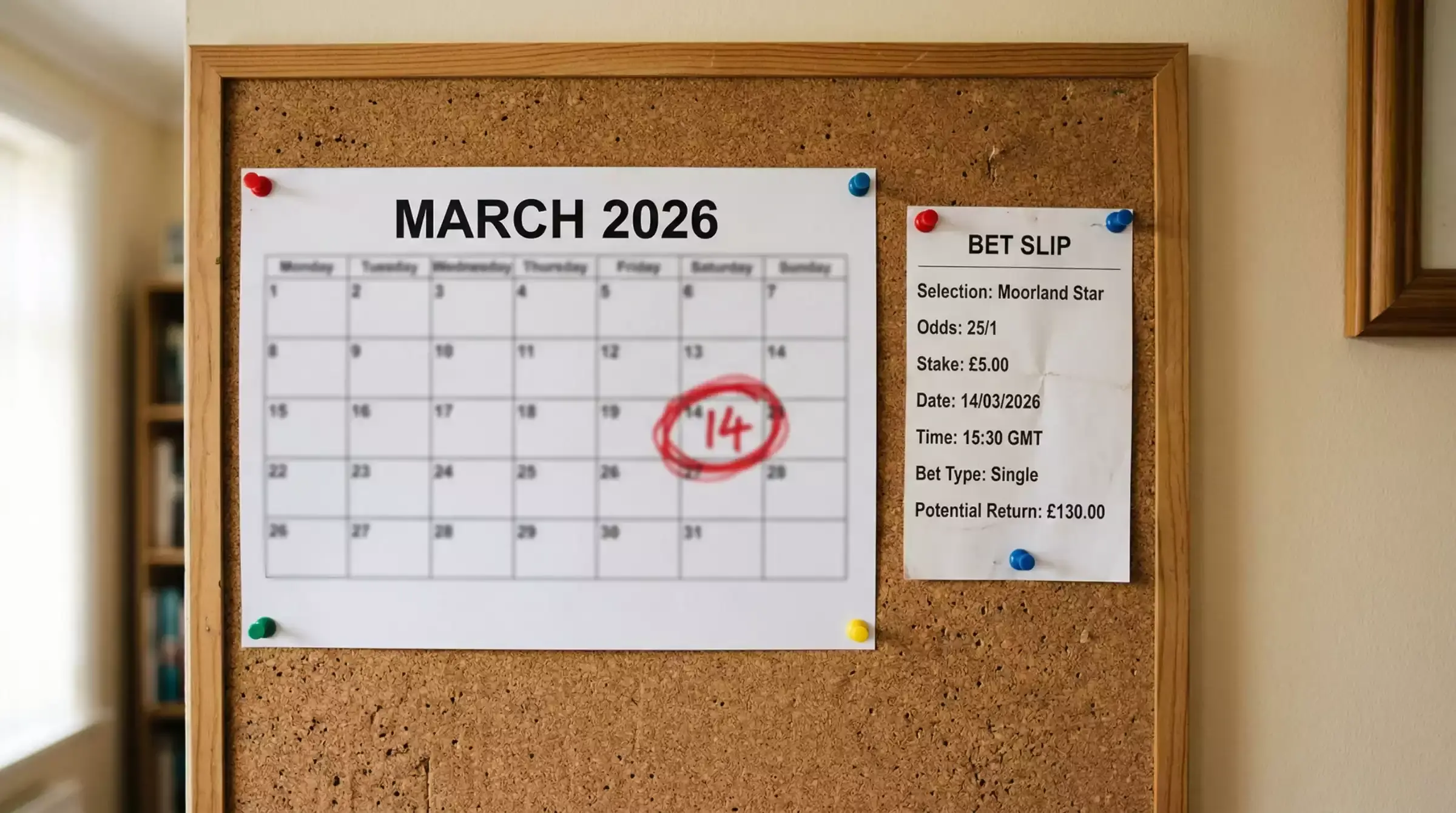

In January 2023, I backed a horse for the Cheltenham Gold Cup at 16/1. By February, it was 8/1. By early March, it was the 5/1 favourite. I felt brilliant — until it was withdrawn two days before the race with a minor tendon issue. My stake disappeared, no refund, no consolation. That is ante-post betting in a single story: the potential for massive value, held hostage by the risk of events you cannot control.
The Grand National alone generates up to 350 million pounds in wagers annually, and a sizeable portion of that money is placed ante-post — weeks or months before the field lines up at Aintree. The allure is obvious: prices that halve or even collapse as race day approaches. The danger is equally obvious, and it does not get talked about enough.
How Ante-Post Markets Open and Settle
Ante-post markets for the major festivals open months in advance. For Cheltenham, you can find prices as early as the previous spring — almost a year ahead. For the Grand National, markets typically firm up after the weights are published in February, though some bookmakers price up the race much earlier. For the Classics on the flat — the 2,000 Guineas, the Derby, the Oaks — futures markets open after promising two-year-old performances in autumn.
The key distinction between an ante-post bet and a day-of-race bet is the settlement rule. When you back a horse on race day and it becomes a non-runner, your stake is returned. When you back a horse ante-post and it is withdrawn for any reason — injury, change of plan, unsuitable ground — your stake is lost. The default rule is “all in, run or not.” There are no exceptions unless the bookmaker explicitly offers a Non-Runner No Bet (NRNB) concession.
Prices in ante-post markets move differently from day-of-race markets. Early prices are based on limited information: a horse’s perceived ability, its connections’ stated intentions, and the assessor’s judgement. As race day approaches, information sharpens — training reports, trial-race performances, going forecasts, final declarations. The market reacts. A horse that runs poorly in a trial will drift; one that wins impressively will shorten. By the time final declarations are made (usually 48 hours before the race for jumps, longer for the flat Classics), most of the available information is priced in.
This information asymmetry is what creates ante-post value. The earlier you bet, the less the market knows, and the wider the pricing errors can be. But the earlier you bet, the longer your money sits at risk with no guarantee the horse will even run.
The Non-Runner Problem and Other Ante-Post Risks
I keep a separate column in my betting spreadsheet for ante-post losses on non-runners. Over nine years, it amounts to roughly 8% of my total ante-post stakes. That is 8% of everything I have committed to early markets — gone, not through bad selection, but through horses that never made it to the start.
Non-runners are the primary risk. Horses are fragile athletes — they pick up injuries, lose form, develop preferences for different ground. A horse backed in November for a race the following March faces nearly five months of potential setbacks. Trainers also change plans. A horse aimed at the Champion Hurdle might be rerouted to the Stayers’ Hurdle if its work suggests it wants further. Your ante-post bet on the Champion Hurdle is dead.
Ground conditions are the second major risk. A horse suited to soft ground that gets backed for a spring festival may face unseasonably dry weather. Even if it still runs, its chance is diminished. You locked in a price based on an assumption about conditions that turned out to be wrong.
Market movement works both ways. Your 16/1 shot might shorten to 5/1, in which case you hold a superb position. But it might drift from 16/1 to 33/1 as negative information emerges, and you are stuck with a horse the market has increasingly rejected. Unlike day-of-race bets, there is rarely a cash-out option on ante-post wagers.
When Ante-Post Prices Offer Genuine Edge
Alan Delmonte, chief executive of the HBLB, noted that early 2025 produced unusually high bookmaker margins, shaped partly by festival outcomes. For punters, the flip side of that margin exists in ante-post markets where pricing is less efficient. The question is when, specifically, those inefficiencies appear.
The strongest ante-post edges emerge in two scenarios. The first is when a horse has a clear target race and the connections publicly commit to it. A trainer who states in October that a particular horse will run in the Champion Hurdle barring injury is reducing one of the two main risks — the reroute. The non-runner risk remains, but you have removed half the uncertainty.
The second is when trial-race results have not yet occurred. Before the key January and February trials, ante-post markets price many contenders at double-digit odds. After a strong trial performance, those odds collapse. If your own assessment of the horse’s ability (based on previous form, breeding, and training reports) already gives it a shorter price than the market offers, that is the window to act. Once the trials confirm what you already believed, the edge is gone.
A practical rule I follow: only place ante-post bets when the available price is at least double what I estimate the day-of-race price will be. That 2:1 ratio gives enough margin to absorb the non-runner risk. If I think a horse will be 6/1 on race day, I need it at 12/1 or bigger ante-post to justify the early commitment.
Non-Runner No Bet Offers: Worth the Trade-Off?
NRNB concessions remove the biggest headache in ante-post betting: the total loss on a withdrawn horse. Several major bookmakers now offer NRNB on selected races, typically the headline events at Cheltenham, Aintree, and the flat Classics. The catch, inevitably, is in the odds.
NRNB prices are shorter than standard ante-post prices, because the bookmaker is absorbing the non-runner risk. The difference varies but can be substantial — a horse at 14/1 in the standard ante-post market might be 10/1 or even 8/1 NRNB. You are paying for insurance in the form of reduced odds.
Whether that trade-off makes sense depends on your risk appetite and the specific horse. For a horse with a known injury history or a trainer who frequently changes plans, NRNB is a sensible precaution. For a robust, healthy horse with a clear, stated objective, standard ante-post at a bigger price may offer better expected value even after accounting for the non-runner risk.
During Cheltenham 2026, a single major bookmaker paid out over 50 million pounds in Best Odds Guaranteed top-ups across the festival. The ante-post market feeds into that ecosystem — horses backed early at big prices who subsequently shorten create large liabilities for bookmakers, which is partly why ante-post markets exist. The bookmaker takes the risk of big payouts but collects on all the non-runners.
My own split is roughly 70% standard ante-post and 30% NRNB, weighted toward NRNB for the most popular festival races where non-runner rates are highest. The key is to treat the decision as a calculation, not a default.
