
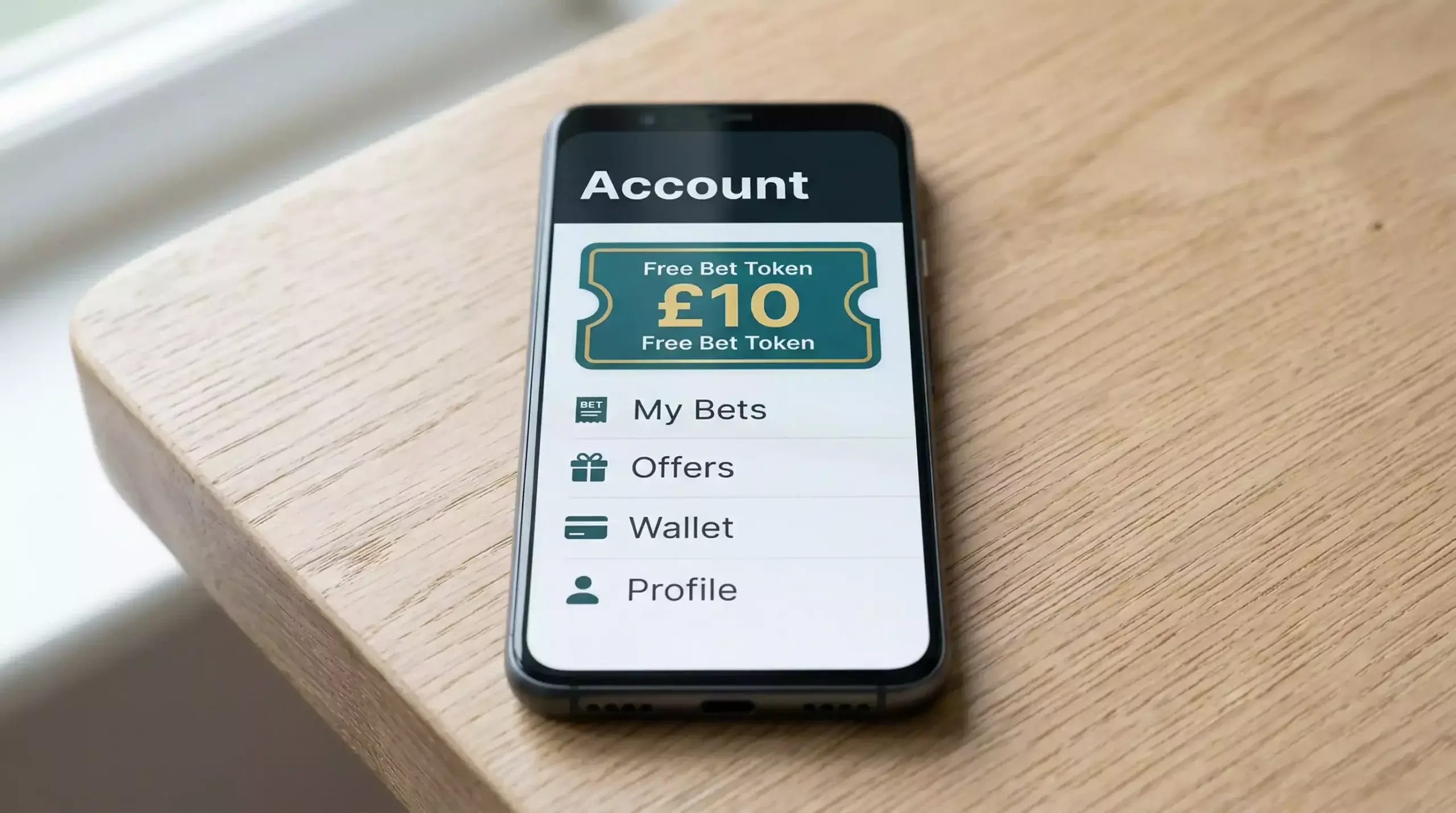

I claimed my first free bet in 2017 and immediately backed a 20/1 shot, thinking the whole 200-pound potential return would land in my account. The horse won. The payout was 200 pounds — minus the 10-pound free bet stake, because the operator used “stake not returned” terms. I collected 190 pounds, which was still a great result, but the surprise taught me something that every new punter needs to hear: a free bet is never quite as free as it sounds. Flutter Entertainment, the group behind several major UK brands, reported revenue of 15.91 billion dollars in 2025 — a figure fuelled partly by the customer-acquisition machine that welcome offers power.
Free bets and sign-up promotions are the front door of the industry. Understanding how they work — really work — lets you use them intelligently rather than getting caught out by the fine print.
Types of Free Bet: Matched, Risk-Free, Bet-and-Get
Not all free bets are created equal, and the terminology is deliberately confusing. The three most common structures in UK horse racing are matched bets, risk-free first bets, and bet-and-get offers. Each has a different value to you as a punter.
A matched free bet is the classic format. You deposit a qualifying amount, place a qualifying bet, and the bookmaker credits your account with a free bet token of equal or specified value. The free bet is separate from your deposit and usually carries stake-not-returned terms — meaning if the free bet wins, you receive the profit but not the notional stake. A 10-pound free bet on a 4/1 winner returns 40 pounds, not 50.
A risk-free first bet refunds your stake as a free bet if your first wager loses. You place a real-money bet; if it wins, you collect normally. If it loses, the bookmaker returns the stake as a free bet token. The refund is not cash — it is a free bet with the same stake-not-returned condition. The real value is lower than the headline figure because you only receive the refund if you lose, and the refund itself is a restricted token rather than withdrawable cash.
A bet-and-get offer requires you to place a qualifying bet at minimum odds, and in return you receive a free bet or a series of free bets over subsequent days. Some bet-and-get offers split the free bet value — “bet 10, get 30 in free bets” might arrive as three 10-pound tokens released on consecutive days.
The common thread across all formats is that the free bet token has conditions attached. Understanding those conditions before you sign up is the difference between using a promotion effectively and wasting time on an offer that delivers less than you expected.
The Fine Print: Wagering, Expiry and Minimum Odds
Rachel Reeves, the Chancellor, increased Remote Gaming Duty to 40% in the 2025 Budget while explicitly excluding horse racing from the rise. That tax environment shapes how bookmakers structure their promotions — operators need to acquire customers efficiently, and the fine print is calibrated to control costs.
The first thing to check is minimum odds. Most qualifying bets must be placed at odds of 1/2 or higher — some operators set the floor at 1/1 or even 2/1. If your qualifying bet is placed below the minimum odds threshold, the free bet will not be triggered. This is the most common reason punters miss out on welcome offers.
Expiry is the second trap. Free bet tokens typically expire within seven days of being credited, sometimes sooner. If you claim a free bet on Monday and forget about it until the following week, it may have vanished. There is no grace period and no extension — the token simply disappears from your account.
Payment method exclusions catch people off guard. Some operators exclude deposits made via e-wallets (Skrill, Neteller, PayPal) from qualifying for the welcome offer. Only deposits by debit card or bank transfer count. This is not always prominently displayed on the promotional landing page.
Wagering requirements are less common on sports free bets than on casino bonuses, but they exist. Some offers require you to wager the free bet proceeds a certain number of times before withdrawal. A 1x wagering requirement means you must bet the winnings once more; a 3x requirement means three times. Any wagering requirement above 1x significantly reduces the real value of the free bet.
One more detail: some operators require the qualifying bet to be settled (not just placed) before the free bet is credited. If your qualifying bet is on a race later in the week, the free bet will not appear until that race finishes.
How to Compare Free Bet Offers Objectively
William Hill accounted for 37.83% of pay-per-click advertising spend in the sports betting category in early 2026 — evidence that the battle for new customers is fought aggressively. With so many offers available, comparing them requires a framework rather than just looking at the headline number.
The most useful measure is the expected value of the free bet. A stake-not-returned free bet on a random horse racing selection at average odds of roughly 5/1 has an expected value of about 40-50% of its face value, depending on market conditions. A 20-pound free bet is worth roughly 8-10 pounds in expectation. That calculation changes if you use the free bet on a longshot (higher expected value per token) or a short-priced favourite (lower expected value).
Compare the qualifying requirement against the expected value. If you need to deposit 20 pounds and place a 20-pound qualifying bet to receive a 20-pound free bet worth approximately 9 pounds in expectation, the offer has positive value only if your qualifying bet itself is on a selection you would have backed anyway. The worst approach is to bet on something you have no opinion about purely to unlock the free bet — that turns the qualifying bet into a cost.
Look at the total package rather than the single headline number. An operator offering “bet 10, get 40 in free bets” sounds more generous than one offering “bet 10, get 20.” But if the first operator pays the 40 pounds in four separate 10-pound tokens with three-day expiry windows, and the second pays 20 pounds in a single token with seven-day expiry, the second offer may be easier to extract value from in practice.
Realistic Expectations: What a Free Bet Is Worth
I keep a spreadsheet of every free bet I have claimed since 2018. The average return per free bet token, across hundreds of uses, is about 45% of face value. That means a 10-pound free bet has historically returned about 4.50 pounds to me, after accounting for the stake-not-returned condition and the randomness of outcomes.
That 45% figure is not a target — it is a long-run average that includes plenty of zeros (the free bet lost) and occasional big returns (the free bet landed on an 8/1 winner). The variance is high, which is why treating free bets as a windfall rather than a strategy is the healthiest approach.
The best use of a free bet, mathematically, is on a selection at longer odds where the stake-not-returned condition costs you less in relative terms. If you use a 10-pound free bet on a 1/2 favourite and it wins, you receive 5 pounds. If you use it on a 10/1 shot and it wins, you receive 100 pounds. The probability of the favourite winning is higher, but the expected value of the free bet is higher on the longshot because the missing stake is a smaller proportion of the total return.
That said, do not force a free bet onto a horse you would never normally back just because the maths looks better on paper. A free bet on a selection you genuinely rate, at odds you consider fair, is the pragmatic middle ground.
